The Everglades is one of the great bird places in North America. More than 360 species have been recorded in Everglades National Park, and it's considered the most significant breeding ground for wading birds on the continent. In fact, protecting those birds from plume hunters was one of the main reasons the park was created. Here are the birds you're most likely to see from the water, and how to tell them apart.
The wading birds
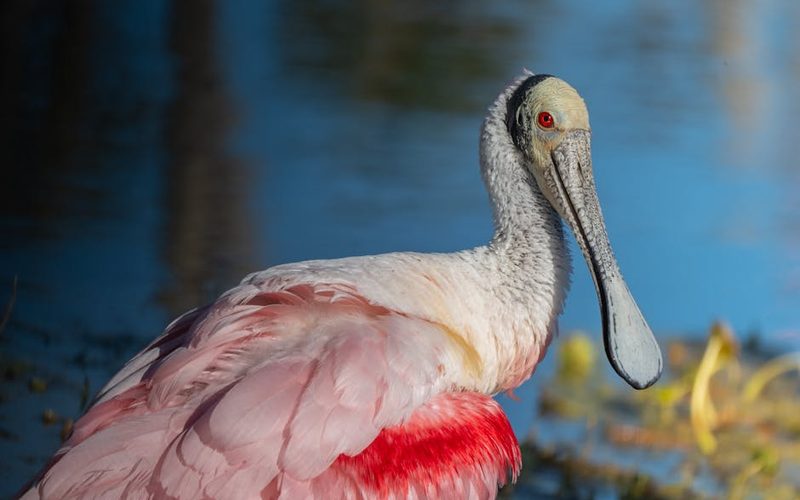
1. Roseate spoonbill. Impossible to mistake: bright pink, with a flat, spoon-shaped bill it sweeps side to side through shallow water to catch small fish and crustaceans. The pink comes from pigments in the crustaceans it eats.
2. Great egret. Tall and all white, with a yellow bill and black legs. Plume hunters nearly wiped it out in the late 1800s, and it became the symbol of the National Audubon Society.
3. Snowy egret. Smaller than the great egret, with a black bill and black legs ending in bright yellow feet (birders call them "golden slippers"), which it shuffles to stir up prey. In 1886 its breeding plumes sold for $32 an ounce, twice the price of gold.
4. Great blue heron (and the "great white heron"). The biggest heron you'll see, with a wingspan around six feet. Far southern Florida also has an all-white form, the "great white heron," found almost entirely in shallow coastal water here and in the Caribbean.
5. Tricolored heron. A slim, slate-blue heron with a clean white belly. It's an active hunter that runs, stops, and turns quickly in the shallows.
6. Little blue heron. Adults are dark slate blue all over. Young birds are pure white in their first year, and molting birds in between look patchy (birders call them "calico").
7. White ibis. The most common wading bird in the park: white, with a long, curved red bill for probing mud. They feed in flocks, and in 2018 the park counted ibis nesting numbers not seen since the 1940s.
8. Wood stork. Just over three feet tall, with a bald, gray head. It feeds by touch, walking with its bill open in the water and snapping it shut on fish. Wood storks were listed as endangered in 1984 and have recovered enough to be taken off the federal endangered species list in 2026.
9. Reddish egret. A shaggy-necked heron that hunts like it's dancing, dashing back and forth and flicking its wings to startle fish.
10. Yellow-crowned night heron. A stocky heron with a black-and-white face, often tucked into the mangroves. It eats mostly crabs.
The fishermen
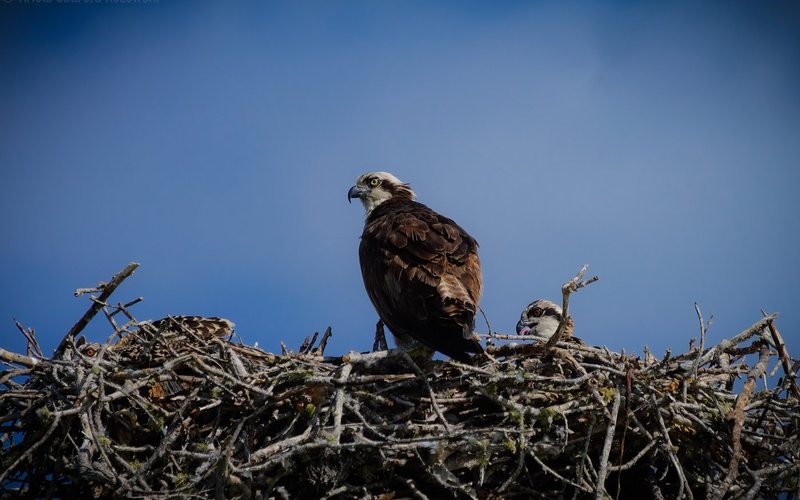
11. Osprey. The only North American raptor that lives almost entirely on live fish. It can turn one toe backward to grip a fish with two toes in front and two behind, and it often nests on channel markers.
12. Bald eagle. Our national bird is also a thief: it will chase an osprey until it drops its fish.
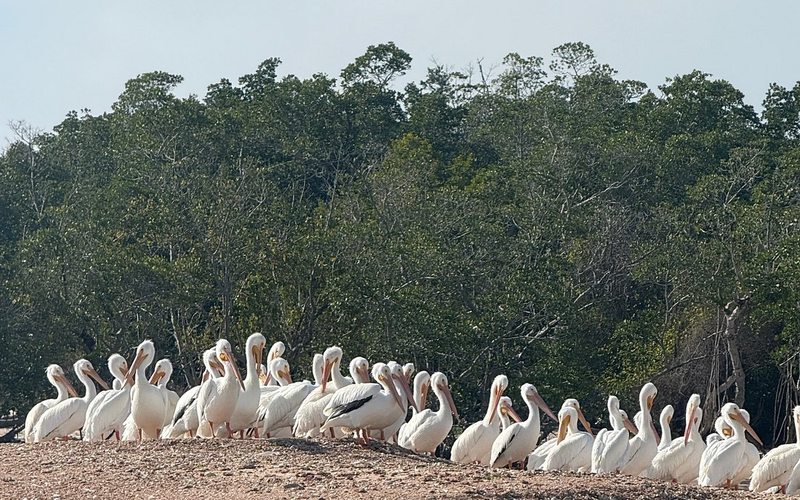
13. Brown pelican. The plunge-diver, folding its wings and hitting the water beak-first to stun fish. Brown pelicans nearly disappeared in the 1960s and 70s and made a full comeback after pesticide rules changed. In winter they're joined by the much larger American white pelican, which doesn't dive; flocks work together to herd fish into the shallows.
14. Anhinga. Often swims with only its snake-like head and neck above the water (hence the nickname "snake bird"), spearing fish with its bill. Afterward it perches with its wings spread to dry. The double-crested cormorant does the same drying pose; the cormorant has a hooked bill.
15. Magnificent frigatebird. The long, angular black bird hanging high over the coast. Its feathers aren't waterproof, so it rarely lands on the water, and it often steals fish from other birds in the air.
Seasonal visitors
The swallow-tailed kite is the black-and-white hawk with a deeply forked tail. It arrives in Florida from late February through April, nests in spring, and heads back to South America in August and September. Watch for the black skimmer too, flying low with its longer lower bill slicing the surface of the water.
When to go birding in the Everglades
- Dry season (about November to April) is the best time. As the water shrinks, fish get concentrated and wading birds gather to feed.
- December through March brings large mixed flocks of ibis, spoonbills, storks, herons and egrets, and big nesting colonies. Spoonbills start nesting first, followed by storks, egrets, herons and ibis.
- April and May are the peak of spring migration.
How to watch without disturbing them
Nesting birds that get flushed off their nests leave eggs and chicks exposed to the sun and predators. Florida's wildlife agency recommends staying well back from bird concentrations (at least 500 feet where you can) and not running boats close to shore by rookery islands. Bring binoculars or a long lens, keep voices down, and let the birds stay put.
Frequently asked questions
How many bird species live in the Everglades?
More than 360 bird species have been recorded in Everglades National Park, including 16 species of wading birds. The white ibis is the most common wading bird in the park.
When is the best time to see birds in the Everglades?
The dry season, roughly November through April, is best. From December through March, wading birds concentrate around the remaining water and gather in large nesting colonies. Spring migration peaks in April and May.
Where can you see roseate spoonbills in the Everglades?
Roseate spoonbills feed in shallow coastal water and mudflats. In Everglades National Park they're seen around Florida Bay and Flamingo and in the shallow bays of the Ten Thousand Islands on the Gulf Coast.
Book a Boat Tour
Small groups, naturalist guides, and the real Everglades National Park. Reserve online in minutes.
Book NowWhy We Don't Run Airboats
The short story behind our quiet-boat, max-six, no-airboat approach.
Learn MoreQuestions? Call 239-695-3633 or book online above.